Smart Hydrogen: The Digital Backbone of a Green Energy Future
9 February 2026 — John Draper
Introduction: The Promise of Green Hydrogen
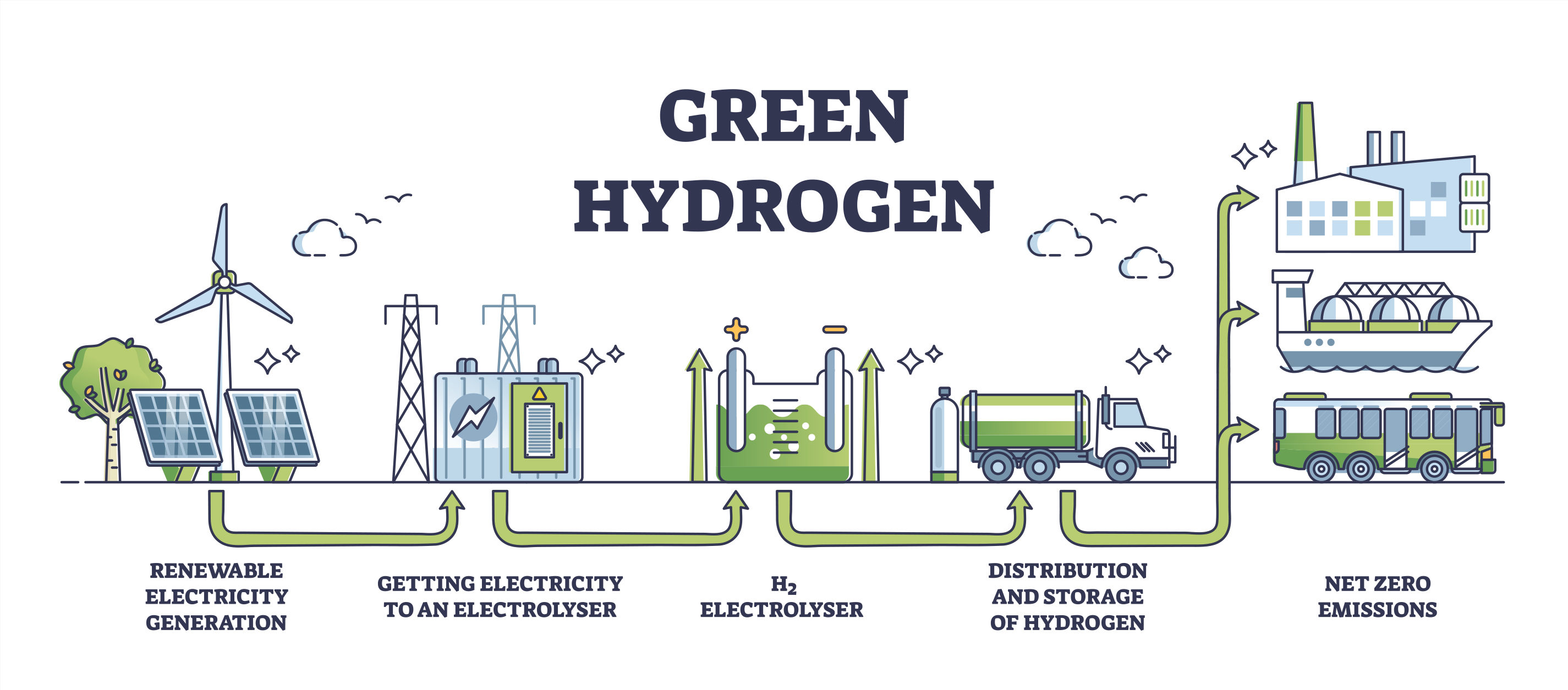
Green hydrogen has rapidly become one of the most talked-about solutions in the global energy transition. Unlike grey hydrogen, which is derived from fossil fuels, green hydrogen is produced using renewable electricity to split water molecules into hydrogen and oxygen via electrolysis. The appeal is clear: it offers a scalable, carbon-free fuel for industries and sectors that are otherwise difficult to decarbonize: steelmaking, aviation, long-haul shipping, and heavy-duty transport.
Global momentum is building. The European Union, Japan, and the United States have all announced multi-billion-dollar hydrogen roadmaps. The International Energy Agency (IEA) projects that global hydrogen demand could grow six-fold by 2050 if net-zero targets are to be met. Yet despite this optimism, the current state of the green hydrogen market is still in its infancy, and the road ahead is filled with challenges.
The Current State of the Market
Today, most hydrogen is still “grey” or “blue,” produced from natural gas with or without carbon capture. Green hydrogen accounts for less than 1% of total hydrogen supply. Electrolyzer capacity is expanding quickly led by Europe, the Middle East, and parts of Asia, but it remains small compared to fossil-based production.
The biggest barrier is cost. Producing green hydrogen today can be two to three times more expensive than fossil alternatives, largely because of high renewable electricity prices and the capital intensity of electrolyzers. Infrastructure remains underdeveloped as well: storage, transport pipelines, and refuelling stations are still limited, constraining demand growth.
Despite these headwinds, the direction of travel is unmistakable. More than 50 countries now have hydrogen strategies, and investment pipelines are growing. The challenge is no longer if green hydrogen will play a role, but how fast it can scale.
The Challenges Ahead
Several structural hurdles stand in the way of green hydrogen’s mass adoption:
- Intermittent renewable supply – Electrolyzers run best with stable power, but wind and solar generation fluctuate. This mismatch drives up costs and reduces efficiency.
- Infrastructure bottlenecks – Hydrogen is difficult to store and transport; pipelines, terminals, and distribution hubs are still rare.
- Certification and standards – Without globally harmonized rules to certify “green” hydrogen, it is hard to build trust in cross-border trade.
- Market risk – Investors remain cautious, as long-term demand and pricing models are still uncertain.
These are not just engineering problems, they are digital problems.
Digital Solutions: The Hidden Enabler
Digital technologies are already proving to be the invisible backbone of the emerging hydrogen economy. Their role will be to reduce costs, improve efficiency, and build trust in markets.
- AI and Data Analytics: Artificial intelligence can optimize electrolyzer operations, adjusting them dynamically to fluctuations in renewable power supply. Predictive maintenance can reduce downtime and extend the life of expensive equipment. Data-driven optimization is expected to deliver double-digit cost reductions in coming years.
- Digital Twins: Digital twins - virtual replicas of hydrogen plants - allow operators to simulate performance, forecast failures, and test design improvements before deploying them in the field. Companies like Siemens Energy and ABB are pioneering digital twin applications for electrolysis plants and hydrogen infrastructure.
- Blockchain and Certification: Guaranteeing that hydrogen is truly “green” requires transparent certification of its carbon footprint. Blockchain-enabled systems are being tested in Europe to provide immutable records of production sources, allowing hydrogen to be traded confidently on international markets.
- IoT and Sensor Networks: Hydrogen is highly flammable, requiring advanced monitoring. IoT sensors can track leaks, pressure, and purity levels in real-time, enhancing both safety and efficiency. The ability to continuously monitor operations will be critical as facilities scale up.
- Smart Grids and System Integration: Hydrogen plants don’t operate in isolation, they are tied into renewable power systems, local grids, and sometimes industrial off-takers. Smart grid technology and digital energy management platforms can match supply and demand dynamically, ensuring electrolyzers run when electricity is cheapest and cleanest.
- Hydrogen Trading Platforms: Early-stage digital marketplaces are emerging to enable hydrogen contracts and certificate trading. These platforms promise to bring transparency to pricing and help build liquidity in what is still a very fragmented market.

Case Studies and Emerging Examples
- In Germany, the H2Global initiative is exploring digital trading and certification mechanisms to jump-start a European hydrogen market.
- Energy companies are piloting AI-driven electrolyzer optimization systems, improving output by up to 20%.
- Startups are creating digital marketplaces for hydrogen offtake agreements, reducing transaction complexity for buyers and sellers.
These examples highlight that the story of hydrogen is as much about bits as it is about molecules.
Outlook: A Digital-Industrial Partnership
The hydrogen economy will not scale through infrastructure alone. Success will depend on marrying heavy industrial assets with advanced digital intelligence. Energy companies and technology providers will need to form new types of partnerships.
Over the next decade, we can expect:
- Widespread adoption of digital twins for hydrogen plants.
- Global rollout of certification platforms, likely blockchain-enabled.
- Integration of hydrogen trading into wider carbon and energy markets.
- Expansion of predictive AI for electrolyzer and transport operations.
The winners will be those who invest not just in steel and pipelines, but in software and data.
Conclusion
Green hydrogen has the potential to reshape global energy systems, but it cannot succeed on cost and infrastructure alone. Digital solutions: AI, digital twins, blockchain, IoT, and smart grids—are the hidden accelerators that will make the hydrogen economy viable.
The future of hydrogen, then, is not only about producing a clean molecule. It is about creating a digital backbone that enables trust, efficiency, and scale. In the coming years, the phrase “smart hydrogen” may become as common as “green hydrogen” and for good reason.